
If you know a major capital gain is coming — from selling your business, investment property, or...

Fleet telematics is one of the most misunderstood safety tools on the market – not because the technology is complicated, but because the people side of it is.
Any business owner who’s rolled out dash cams or driver monitoring knows there are two very different reactions: leadership sees safety, accountability and protection… and employees see something that might feel like surveillance. The challenge isn’t whether fleet telematics works. It’s how you bring your people along with you so the tool makes your team safer – not more stressed.
It’s one example of how safety, culture and risk management all intersect and why a holistic approach matters.
Why Fleet Telematics Matters for Safety and Risk Prevention
When used the right way, fleet telematics is one of the most effective ways to prevent accidents, protect your drivers and reduce the ripple effects of a single bad incident. It’s also a key component of a broader, proactive approach to identifying and reducing operational risk within your safety programs.
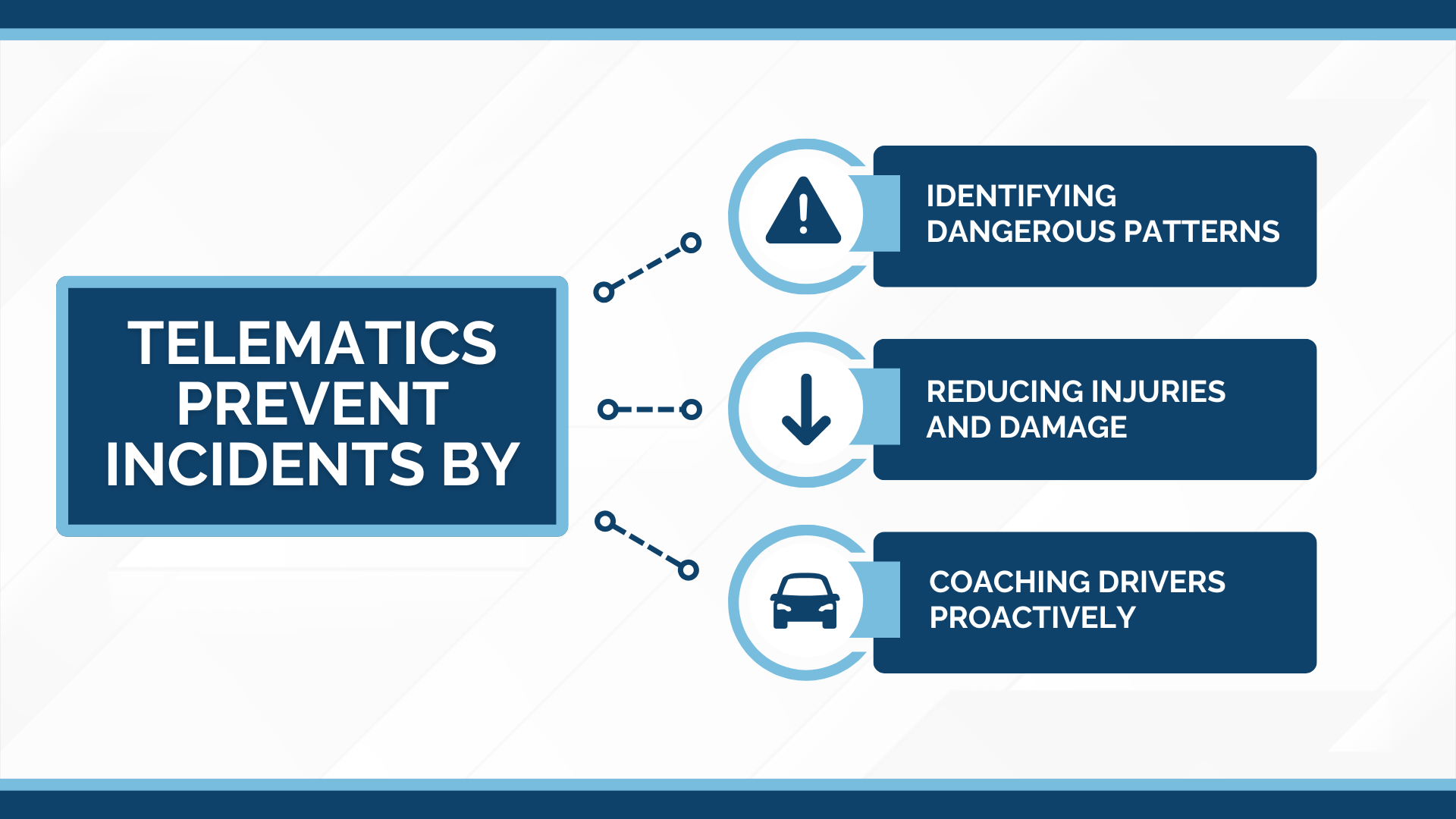
It’s not just about tracking how fast someone is driving. Fleet telematics can help you:
- Identify patterns like hard braking, quick acceleration or distracted driving
- Reduce the likelihood of injuries, downtime and vehicle damage
- Coach drivers before risky habits turn into real consequences
The numbers support this too. A survey of more than 500 drivers reported that 52% felt safer and 53% drove more cautiously after in-cab cameras were installed – with more than one-quarter avoiding a crash because of in-cab alerts.
And when accidents do happen, fleet telematics becomes just as valuable. The data and video can help reconstruct what happened, protect drivers from false blame and give insurance carriers the clarity they need to process claims faster and more accurately. Instead of relying on conflicting stories or incomplete reports, you have objective evidence that supports your employee and your business.
For most companies, that’s the real reason fleet telematics enter the conversation in the first place – you want your people to get home safely, you want fewer surprises and you want a clearer picture when something goes wrong.
But even with the best intentions, introducing fleet telematics isn’t just a safety decision. It’s a cultural one. How you roll it out – and how your team understands it – will determine whether it becomes a tool for protection or a source of tension.
Why Employees Push Back on Fleet Telematics (And Why That Reaction Is Valid)
Before any company introduces fleet telematics, it’s important to name the elephant in the room: employees rarely push back because they don’t care about safety. They push back because they don’t want to feel monitored or mistrusted.
And when you see it from their perspective, that reaction makes sense. Fleet telematics can feel unfamiliar at first – especially with dual-facing cameras or audible alerts. Employees naturally wonder:
- What exactly is being recorded?
- Is someone watching me drive?
- Will this be used against me?
- What happens if I make a small mistake?
- Why now? Why this? Why us?
These are normal questions. When people don’t understand how something will affect them, they fill in the gaps on their own.
That’s why the way you introduce fleet telematics matters – your approach sets the tone for how your team will experience it from day one.
A Culture First Approach to Introducing Fleet Telematics
If you want fleet telematics to truly help your business – and not create unnecessary stress – you need a cultural playbook. The technology should make your people feel supported, not watched. Protected, not pressured.
Here’s how to introduce fleet telematics in a way that strengthens your business and positively adds to your culture of safety.
1. Start With Purpose: Fleet Telematics Are About Protecting People
The tone you set in the first conversation determines everything that follows. Fleet telematics should be introduced as a safety tool, not a monitoring tool.
Explain the real reasons you’re adopting it:
- You want drivers to have evidence to defend themselves during a claim
- You want fewer injuries and fewer close calls
- You want less stress on the team
- You want consistency and accountability across all drivers, not subjective standards
When people understand that fleet telematics exist to protect them, it becomes far easier for them to get on board.
2. Maintain Transparent Communication Around Fleet Telematics
Uncertainty is the biggest driver of pushback. Clear communication builds trust.
Be transparent about:
- What data is collected
- What data is not collected
- Why the company chose to invest in it
- How footage or data will be used
- What protections it gives employees
- What policies govern it
- How long data is stored
Transparency removes the mystery and replaces it with clarity – which makes the rollout feel intentional rather than abrupt.
3. Involve Employees in Fleet Telematics Conversations from the Start
People are more open to change when they feel included in it. Involving employees early helps reduce apprehension and builds respect.
Ways to involve your team:
- Let them see the devices before installation
- Offer a safe environment to ask questions
- Invite feedback about alerts, camera placement or policy language
- Create a pilot group of trusted drivers to test the system
When employees feel heard, they are far more willing to adopt fleet telematics.
4. Use Fleet Telematics for Coaching, Not Control
How you use the data shapes how people feel about the data.
If fleet telematics becomes a punishment tool, morale suffers. But when it’s used to coach, support and improve performance, drivers often appreciate the clarity it provides.
Positive ways to use fleet telematics:
- Recognize drivers with strong safety scores
- Celebrate improvements over time
- Use data to adjust training, not penalize drivers
- Review trends to prevent future incidents
- Share meaningful wins
- Coach in private, praise in public
The goal is to help drivers succeed – and research shows it matters. In fact, driver approval of in-cab cameras jumps to 87% when footage was used for coaching rather than discipline.

5. Equip Leaders to Reinforce the Right Message About Fleet Telematics
Supervisors and frontline leaders shape how fleet telematics is experienced day to day. They need to understand the purpose behind it and how to communicate that purpose clearly.
Train leaders on:
- How to talk about fleet telematics effectively
- How to explain incidents constructively
- When to use and not use footage
- How to keep conversations focused on protection and improvement
When leaders communicate consistently, employees feel more confident that the technology is being used fairly.
6. Reinforce Wins and Celebrate Safety Improvements Powered by Fleet Telematics
This step is easy to overlook but powerful. If fleet telematics prevents an incident, reduces a claim or helps identify a risky behavior before it becomes a problem, share that outcome.
People need to see the practical value. If the only time employees hear about fleet telematics is when something goes wrong, it will always feel punitive. But when they see it leading to clearer decisions, safer outcomes and fewer headaches, trust in the tool grows naturally.
Build a Safety Strategy That Works for Your People and Your Business
Fleet telematics are just one piece of a much bigger safety and risk picture. At Ellerbrock-Norris, we help businesses strengthen their safety culture through training, planning and ongoing support – so the tools you choose ultimately work for your people, not against them.
If you want to improve your safety culture, reduce risk across your operation or build a long-term strategy that protects your team, our advisors can help.
Your people deserve to feel safe at work – and your business deserves a strategy that helps them get there.
Want a safer, more resilient operation? Let’s chat.